What to Do When Pain Persists After Knee Replacement Surgery
Still dealing with pain after knee replacement surgery? Learn the most common reasons it happens, what you can do about it, and when to follow up with your surgeon.


When it comes to total knee replacement surgery, one of the most consistent predictors of how well someone does isn't their age, their fitness level, or even the complexity of their surgery. It's what they believed going in. Knee replacement recovery expectations have a measurable influence on pain perception, satisfaction, and long-term function, and the research backs this up in ways that are genuinely fascinating. What you think is going to happen often shapes what actually does.
There's a well-documented phenomenon in medicine called the expectation-outcome relationship, and it's especially strong in orthopedic rehabilitation. People who go into total knee replacement surgery with realistic, informed expectations about the timeline and process tend to report higher satisfaction with their results, even when the objective outcomes are similar to those of people who were less prepared.
Conversely, people who expect to be pain-free and fully functional within a few weeks often feel disappointed and anxious when that doesn't happen, which can actually amplify their experience of discomfort.
This isn't about positive thinking as a magic cure. It's about how the brain processes pain signals, how anxiety influences physical symptoms, and how a sense of being "on track" versus "behind schedule" affects motivation and effort during rehabilitation.
When you know what to expect, you're less likely to interpret normal post-surgical swelling or stiffness as a sign that something has gone wrong, and that mental steadiness has real physical consequences.
One of the most common mismatches I see is between what people expect in terms of pain relief and what total knee replacement surgery actually delivers. The surgery is highly effective at reducing or eliminating the deep, chronic joint pain that comes from bone-on-bone arthritis. Most people experience dramatic relief from that particular kind of pain. However, surgical pain, the soreness that comes from the procedure itself, is a different matter, and it takes time to resolve.
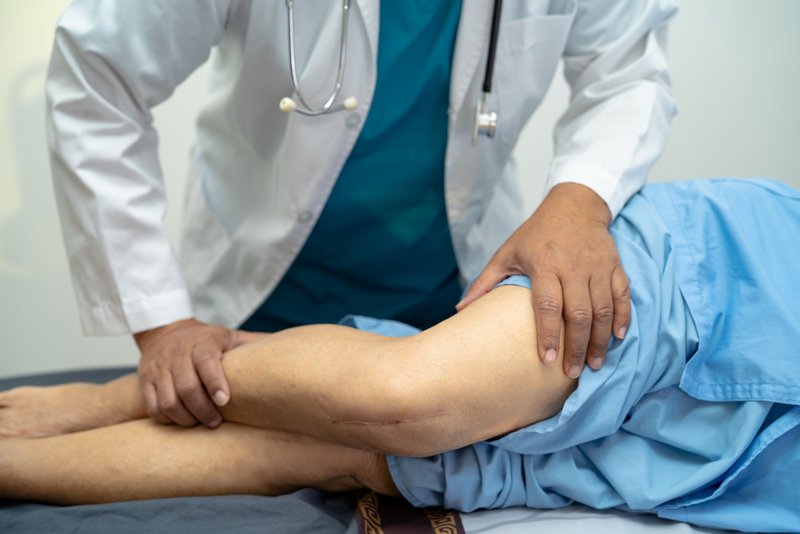
Swelling is another area where expectations often need calibrating. The knee can remain visibly swollen for weeks or even months after total knee replacement surgery, and that's normal. Swelling is the body's healing response, and it doesn't mean the surgery didn't work. Understanding this in advance means you won't be alarmed when your knee looks puffy at week six, and you won't be tempted to dial back your rehab exercises out of fear.
Full knee replacement recovery, the kind where your new knee feels genuinely integrated into your body and daily life feels normal again, typically takes six months to a year. That's a meaningful commitment of time and effort. People who know this going in tend to pace themselves better and stay engaged with their rehabilitation program throughout the process rather than expecting a dramatic turnaround at the six-week mark.
The connection between expectations and pain is one of the more counterintuitive findings in rehabilitation science, but it's one I've seen play out countless times. When you anticipate that a movement is going to be extremely painful, your nervous system often obliges by amplifying the signal. When you approach the same movement with a calm understanding that some discomfort is normal and manageable, the experience tends to be less intense.
This is why catastrophizing, the tendency to imagine worst-case scenarios, is such a significant obstacle in knee replacement recovery. People who score high on measures of pain catastrophizing before surgery consistently report worse pain and function after surgery, even when the surgical outcomes are objectively comparable to those of less anxious counterparts. Addressing this mindset before and during rehabilitation isn't a soft, optional add-on. It's a core part of doing well.
Practical strategies that help include learning about the typical recovery timeline in detail, asking your surgeon and physical therapist specific questions about what you'll feel and when, and connecting with others who have been through total knee replacement surgery successfully. Hearing a real person say "Yes, week three was rough, but by month three I was walking the dog every day," does more to recalibrate expectations than any pamphlet.
One of the most valuable conversations you can have before surgery is an honest one with your surgical team about your personal goals. What does a successful outcome look like for you specifically? Getting back to gardening is a different target than returning to recreational tennis, and your expectations should be grounded in what's achievable given your starting point, your age, and the activities you want to return to.

It also helps to identify the milestones that matter most to you and ask your care team when those realistically come within reach. Walking without a cane, driving, returning to work, sleeping through the night without pain, these all happen at different points in knee replacement recovery, and knowing the rough timeline for each removes a lot of the uncertainty that feeds anxiety.
Write your goals down. Share them with whoever is supporting you through surgery and rehabilitation. Having an external record of what you're working toward and a person in your corner who knows what matters to you keeps you focused when the process feels slow.
If there's one expectation I'd encourage you to hold firmly, it's this: the effort you put into rehabilitation directly determines the quality of your outcome. Not entirely, and not without limit, but substantially. People who engage fully with their post-operative exercise program, who work on their range of motion and strength even when it's uncomfortable, consistently achieve better results than those who wait for the knee to heal on its own.
Your new knee is a starting point, not a finished product. The surgery creates the potential for pain-free movement; your work in the weeks and months that follow is what realizes that potential. Go in knowing that, and your knee replacement recovery expectations will be some of the most powerful tools in your corner.
Good luck on your knee journey!
Good knees start here. Don’t miss a step, subscribe to KneeMail for free tips from knee expert Shehla Rooney, PT!
Still dealing with pain after knee replacement surgery? Learn the most common reasons it happens, what you can do about it, and when to follow up with your surgeon.

Not sure if it’s time for total knee replacement surgery? These 7 signs can help you have a more informed conversation with your orthopedic surgeon.

Pain catastrophizing can quietly derail your knee replacement recovery before it even begins. Learn what it is, how it affects outcomes, and what to do about it.
Wondering what happens to your ACL after knee replacement? Learn why it’s removed, how your implant compensates, and what it means for your recovery.

Discover the benefits of prehab before total knee replacement surgery and how a few weeks of preparation can set you up for a faster, smoother recovery.